

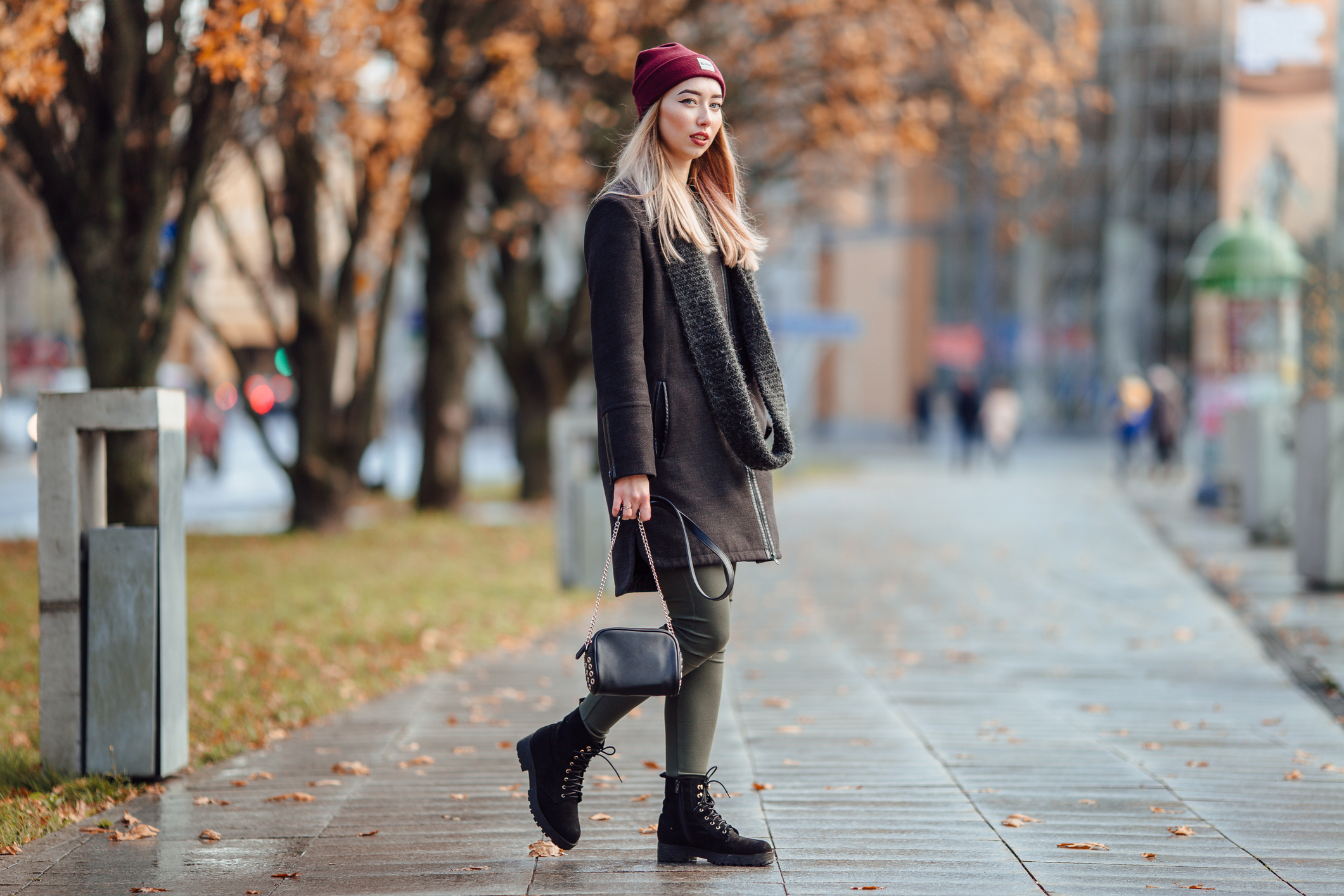
Fall dressing sounds wonderful in theory.
Sweaters. Jackets. Scarves. Boots. Layers upon layers of beautiful clothes.
Then you actually get dressed and somehow you can’t move your arms.
Layering is one of the best parts of fall style, but more layers don’t automatically make an outfit more interesting. The trick is giving each layer a purpose.
Instead of piling things on and hoping for the best, build your outfit in stages.
Layer One: The Base
Start with the piece that could theoretically exist on its own.
This might be a fitted tee, tank, button-down, turtleneck, dress, or lightweight knit.
Because everything else is being built around it, think about both comfort and silhouette. If you know you’re adding multiple layers, a slimmer or lighter base can prevent the outfit from becoming unnecessarily bulky.
This is also where you can bring in a contrasting neckline or a glimpse of color that will show beneath your other pieces.
Layer Two: Add Texture or Warmth
Next comes the layer that makes the outfit feel distinctly fall.
Think cardigan, sweater, vest, or lightweight knit.
This is your chance to create contrast. A crisp button-down beneath a fuzzy knit. A thin turtleneck under a cardigan. A simple dress beneath an oversized sweater.
You don’t need every layer to make a statement. In fact, layering usually works better when the pieces support one another instead of competing.
Layer Three: Add Structure
This is where a blazer, leather jacket, denim jacket, trench, or structured overshirt comes in.
Structure gives all those softer layers a boundary.
Pay attention to length here. If your sweater is longer than your jacket, decide whether you like that intentionally staggered effect. If not, tuck or adjust the inner layer.
This is also the point where checking your outfit from the side can be surprisingly helpful. Layers add dimension, and sometimes something that looks balanced from the front feels completely different from another angle.
Layer Four: The Outer Layer
Once temperatures actually require it, add your coat.
And yes, your coat is part of the outfit.
Think about how its length interacts with everything underneath. A long coat can streamline a collection of shorter layers, while a cropped coat can highlight the waist or proportions underneath.
Most importantly, make sure there’s enough room. If your favorite fitted coat only works over a T-shirt, it probably isn’t the coat for your chunkiest sweater.
The Final Check
Before leaving, ask yourself three questions:
Can I move comfortably?
Can I see the shape of the outfit?
Does every layer have a reason to be there?
If the answer to all three is yes, you’re probably done.
Great fall layering isn’t about wearing as many pieces as possible. It’s about creating depth without losing the outfit underneath.
Base. Texture. Structure. Outerwear.
Once you have the formula, you can break it however you want.
By Julia Belian


FOLLOW ME
Connect with me
Let's Connect!